



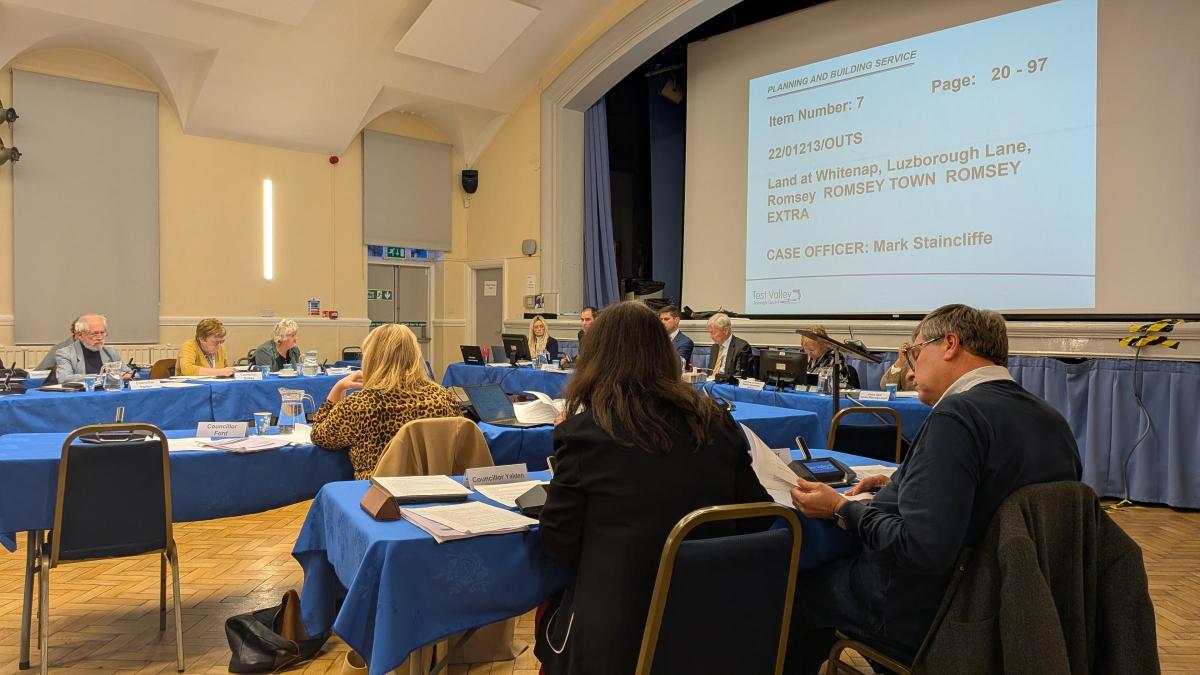
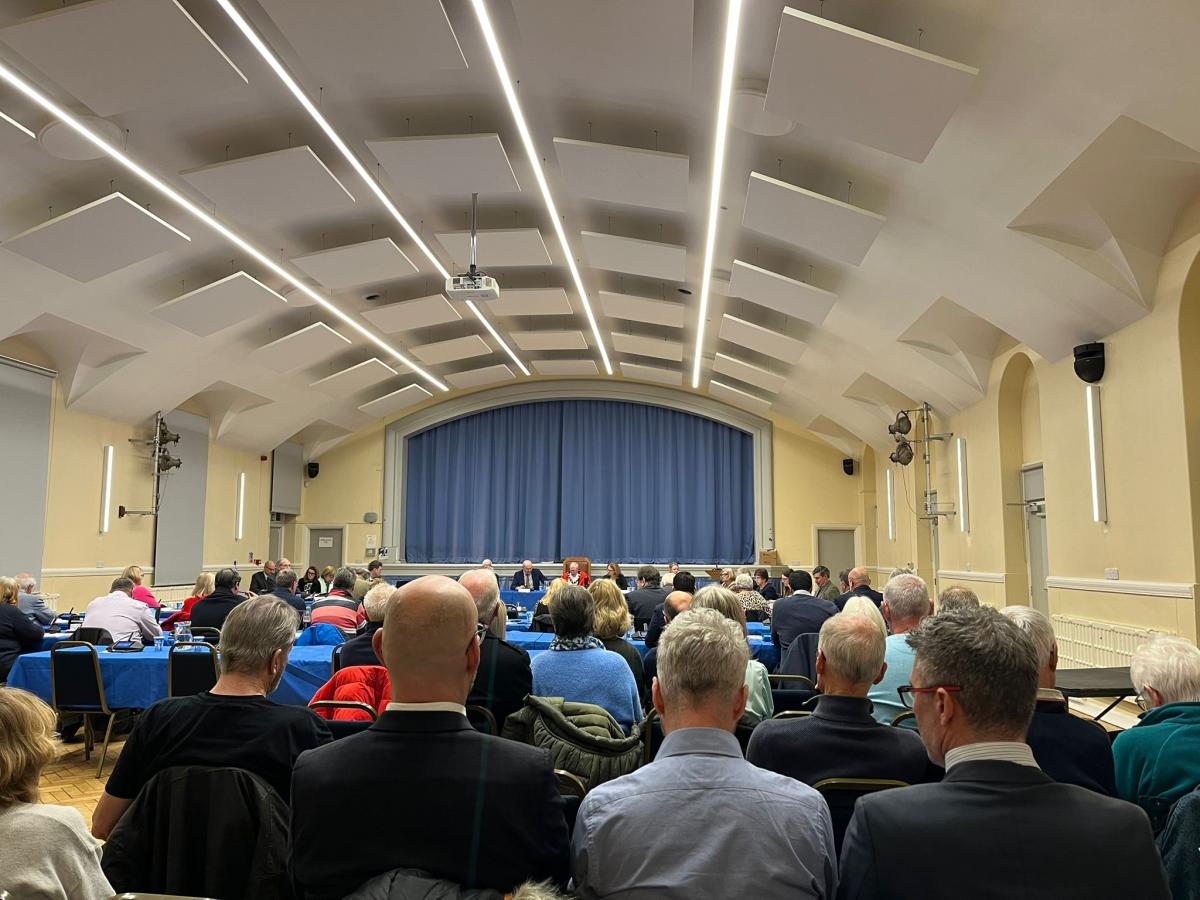

Test Valley Borough Council has voted to scrap its draft Local Plan and start again under the Government’s new "gateway" system, after a stormy debate that laid bare deep political and community divisions over how the borough should grow.
Councillors backed the recommendation on 22 July by 22 votes to nil, with 15 abstentions, in what was effectively a Conservative-backed move opposed by the Liberal Democrats.
The decision follows a sharp rise in Test Valley’s housing requirement from 524 to 934 homes per year, a 78 per cent increase which officers say has made the existing plan "unworkable."
Key sites at Weyhill, Appleshaw and part of Stockbridge were withdrawn during consultation, removing around 800 homes and leaving too little time to redesign the plan before the December 2026 Government deadline.

Public speakers urged councillors not to walk away from plan-led development.
Miss Hostely told the meeting: "Committing to a local plan is one of the greatest responsibilities entrusted to our local authorities.
"I urge this council to show leadership and adopt a local plan that means you will exercise planning judgement entrusted to you."
Others warned of infrastructure strain.
Brian Fraser said planners must ensure drainage and services keep pace with growth, adding: "We need our council to support the residents of Test Valley and our countryside, not Whitehall.
"This council needs to stand up for us, not London."
Several speakers raised concerns about democratic engagement.
Belinda Dix argued that "meaningful democratic consultation" was being undermined when residents were invited to comment only after key decisions had effectively been made, and called for "genuine, early and meaningful" involvement in shaping the next plan.
Test Valley currently lacks a five-year housing land supply, and 28 of the 32 draft allocation sites already have applications or permissions, with at least 1,480 further homes promoted on speculative sites outside the draft plan.
Public speaker Ms Jeffries asked what policies councillors could "realistically rely upon" if the plan-led system had been weakened and protections were unclear.
The debate exposed frustration across party lines.
Cllr David Drew warned that appeals overseen by Government inspectors often overturn local refusals, saying he felt "bent over shafted by the government and beaten up around the head by the local communities."
Cllr Mark Cooper said refusals "almost universally" went on to be approved at appeal.
Others turned their fire on the council’s own record.

Read more
-
Outline plans for 60 homes on farmland attract fears of 'urbanising' village
-
£510,000 revamp of play park completed after almost nine-year campaign
Cllr Sally Yalden noted the current plan, adopted in 2016, was meant to be reviewed by 2021 and questioned why "no replacement plan was published at all" in the years before national changes, pointing to Winchester’s adopted plan as leaving that authority in a "far stronger position" to resist speculative development.
Cllr Luigi Gregori likened the situation to "zugzwang" in chess – a forced move leading towards checkmate – arguing the council had been "forced into a position of changing course quite dramatically" after "years of neglect", and listing missed opportunities on council housing, infrastructure and GP provision.
Cllr Neil Gwynne said "we could have moved more quickly", again contrasting Test Valley with Winchester.
There was anger from residents’ champions too.
Cllr Susanne Hasselman described communities "in uproar", citing village applications claiming good bus links where "there are no buses running."
Cllr Rohit Kohli said he had not heard "an apology for our residents", who "welcome the right development" but now faced more speculative schemes.
Water infrastructure and privatisation also came under fire.
Cllr Alan Dowden blamed leakage and historic decisions on water company privatisation, while Brian Fraser and others highlighted pressures on supply and sewer capacity.
Council leader Cllr Phil North called the Local Plan saga "one of the most frustrating things" of his time in charge, arguing the Government had handed councils "all the responsibility without any power" and that the draft plan had been "overtaken by events."
He said Test Valley now needed to "pivot" to the new system and work with neighbouring authorities, including the future Mid Hampshire unitary and wider Hampshire and Solent bodies.

Portfolio holder Cllr Phil Bundy acknowledged "this is not a position that any of us wish to be in", but insisted speculative schemes were "not an automatic approval" and could still be refused where there were "sound planning reasons."
For now, the council expects to start work on a new-style plan later this year, with an initial "gateway" assessment in 2027 and adoption targeted for 2029.
With Test Valley Borough Council itself due to be abolished in April 2028 as part of a move to unitary government, the new plan is intended to align with the incoming authorities rather than a borough that may no longer exist by the time it is in force.
Residents, however, face several more years of uncertainty over where new homes will go, and a continued wave of speculative applications until a new framework finally takes shape.
Following the meetings, Cllr Sally Yalden said: "The Government's higher housing targets undoubtedly made the challenge harder.
"But they don't explain why, years after our Local Plan should have been reviewed, its replacement was still only at the earliest stage of preparation."


Share