




A TEENAGER who drove at speeds of up to 123mph while drunk, ploughing through red lights and colliding with another car during a police pursuit across Hampshire and the New Forest, has been spared jail due to his fragile health following a heart transplant.
Jimmy James, 18, of Kingsclere Road, Whitchurch, appeared before His Honour Judge Christopher Parker KC at Winchester Crown Court on Friday, August 28, having previously pleaded guilty to dangerous driving, driving with excess alcohol, driving without insurance and failing to stop after a road accident.
The court heard that James, who turned 18 in March this year, took his uncle's silver Volkswagen Fox from the family home in Whitchurch on June 13 and drove three friends to Bournemouth beach, where he consumed alcohol. When he later tried to get home, he became anxious after realising his temporary insurance on the vehicle had expired.
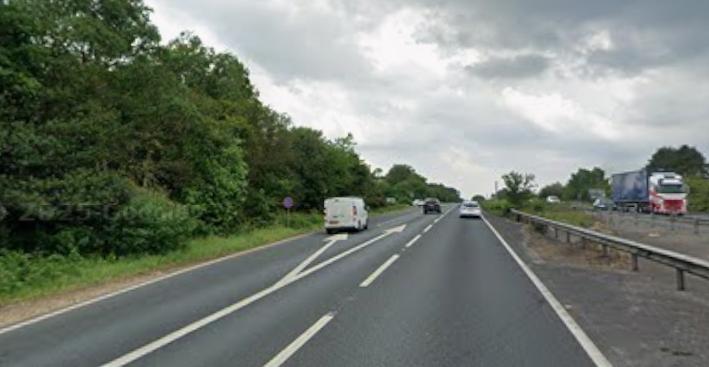
What followed was described by the judge as "a prolonged, persistent, and highly dangerous course of driving" lasting nearly 40 miles. He sped along the A31, A303 and roads between Andover and Whitchurch. Footage played to the court showed James driving along the A31 eastbound near Stoney Cross at speeds exceeding 114mph, weaving through traffic and using the hard shoulder to squeeze past vehicles in the overtaking lane, dangerously close to the central reservation. At points, he was recorded travelling at more than 123mph.
READ MORE
-
Fly-tipper who dumped rubbish in field fined after letter traced back to him
-
'Petrolhead' driver spared jail after filming himself drifting on roundabouts
-
Man jailed for falsely naming innocent person as driver in speeding offence
-
Woman, 78, left biker with life-changing injuries after U-turn on blind bend
-
Airfield reopens after plane crash which left student pilot seriously injured

James overtook other vehicles "on the inside and when there was no space at all between lane two and the central reservation," the judge said, before colliding with a yellow Citroen, tearing off its wing mirror and leaving significant scraping to the bodywork. He failed to stop.
Rather than stopping for police, James continued driving erratically, cutting down a slip road onto a roundabout and driving through red traffic lights and across junctions. Officers lost contact with the vehicle on the road and were forced to track it using a police helicopter as James drove through Andover and along country roads and an industrial estate.
Judge Parker told James: "How you managed not to kill yourself, passengers, pedestrians, cyclists, other drivers is anybody's guess." He added that James's driving was "exceptionally dangerous and unpredictable" and that he was "trying to get away from the police" throughout.
James's vehicle was eventually brought to a stop using a stinger device on Harrow Way in Whitchurch. He and his three passengers fled the car on foot but were arrested. James was later breathalysed and found to have 43 microgrammes of alcohol per 100 millilitres of breath, over the legal limit of 35 microgrammes.
Judge Parker told James he was "exceptionally fortunate" not to have been charged with causing death by dangerous driving, causing serious injury by dangerous driving, or manslaughter. "The prolonged stupidity of your actions beggars belief," he said. "This was a prolonged, persistent and highly dangerous course of driving. You so easily could have been a headline: 'young man kills himself and three friends'."
The judge noted that the actual damage caused was "very minor," limited to grazing one car, but said the dangerous driving was aggravated by James being uninsured, over the drink-drive limit, and failing to stop after the collision.

The court heard extensive details of James's health, which the judge said had a direct bearing on the sentence. James was diagnosed with aggressive leukaemia as an infant and spent much of his early years in hospital. He was later diagnosed with a resulting cardiomyopathy and experienced end-stage heart failure at the age of 12, requiring regular hospital visits throughout his childhood.
A statement from his mother, Caroline James, described him during that period as "small and weak," with no friends. Much of his teenage years, the court heard, "he just existed." His life changed after he received a heart transplant in 2025, which "opened up" his world beyond his bedroom, though he missed many of the milestones his peers experienced, including school, GCSEs and the chance to establish boundaries or make ordinary teenage mistakes.
Defence submissions noted that James had told his probation officer he believed the friends he drove to Bournemouth may have been "using him" to drive, having bought him alcohol once there. The court also heard he has recently spent time back on a transplant ward and remains at risk of organ rejection, a risk the judge said could not be ignored even in the coming weeks.
James had no previous convictions, and the court heard he had several positive character references, including from Danny McLoughlin, a company director who said he hoped to offer James a job.
Judge Parker was explicit that James's medical history did not excuse his conduct. "By themselves your medical conditions would not have any significant bearing on your culpability here," he said. However, he accepted the isolation caused by James's illness during adolescence may have contributed to his behaviour: "It may be that your anxiety made you more prone to this idiotic show-off behaviour."
The judge said that had James been slightly older, or without his ongoing health complications, immediate custody would have been unavoidable. There is no question whatsoever that the sentencing in your case would have been between 14 and 16 months detention," he said.
He described the decision to suspend the sentence as "extremely borderline," adding: "Without your ongoing medical complications, at your age, you would be going straight into detention. The chance of heart transplant rejection is something which cannot be ignored."
James was sentenced to 14 months' detention in a young offenders' institution for dangerous driving, suspended for two years, with a clear warning that any further offence would result in immediate detention. He must also complete 200 hours of unpaid work.
He was disqualified from driving for three years and cannot drive again until he passes an extended retest, with his licence endorsed accordingly. He was fined £500 for the excess alcohol offence, with no separate penalty imposed for the insurance or failing-to-stop offences. No order for costs was made, though James remains liable for the statutory victim surcharge.


Share